Wadhangarii–Barton Park, Recognition, and Why the Naming Rules Need to Change
The recent Leader newspaper reported on the debate around the proposed dual naming of Barton Park as Wadhangarii–Barton Park and the Geographical Naming Boards refusal to allow the dual naming yet...

There’s still something surreal about speaking in a council meeting and then seeing your words reflected back through the media cycle a day later. I’m still getting used to that councillor feedback loop, motions become headlines, speeches become quotes, and ideas suddenly become part of a much bigger public conversation.
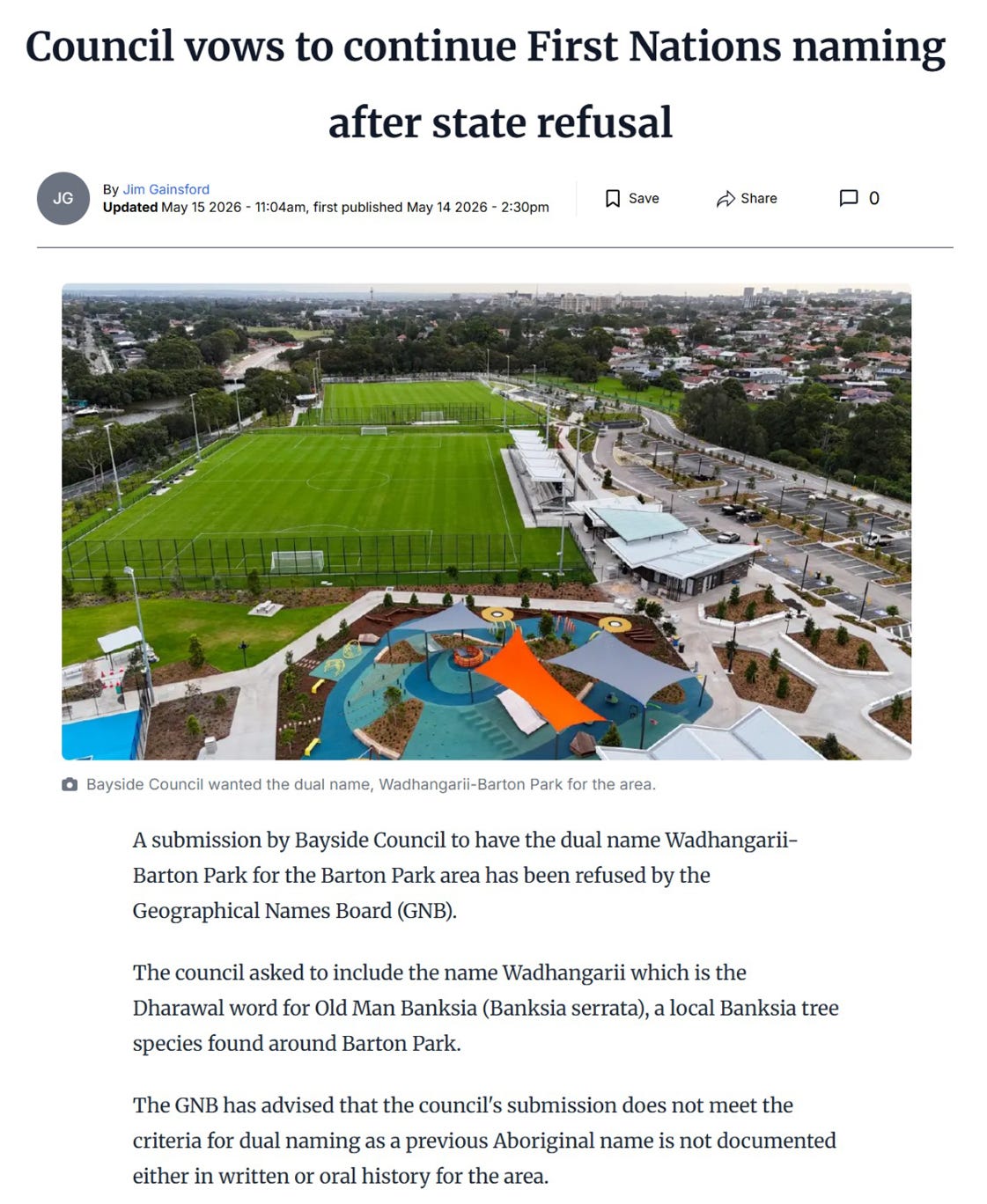
But this is exactly why I wanted to become a councillor in the first place: to advocate for peace, justice, recognition, and a more inclusive understanding of who we are as Australians. This motion put up by Peaceful Bayside was a great way to restart this important conversation on recognising First Nation history and culture in the Bayside LGA.
Recently, The Leader reported on the debate around the proposed dual naming of Barton Park as Wadhangarii–Barton Park. The article noted that the proposal had not been accepted by the Geographical Names Board, despite support from Bayside Council and consultation around the proposed Dharawal name.
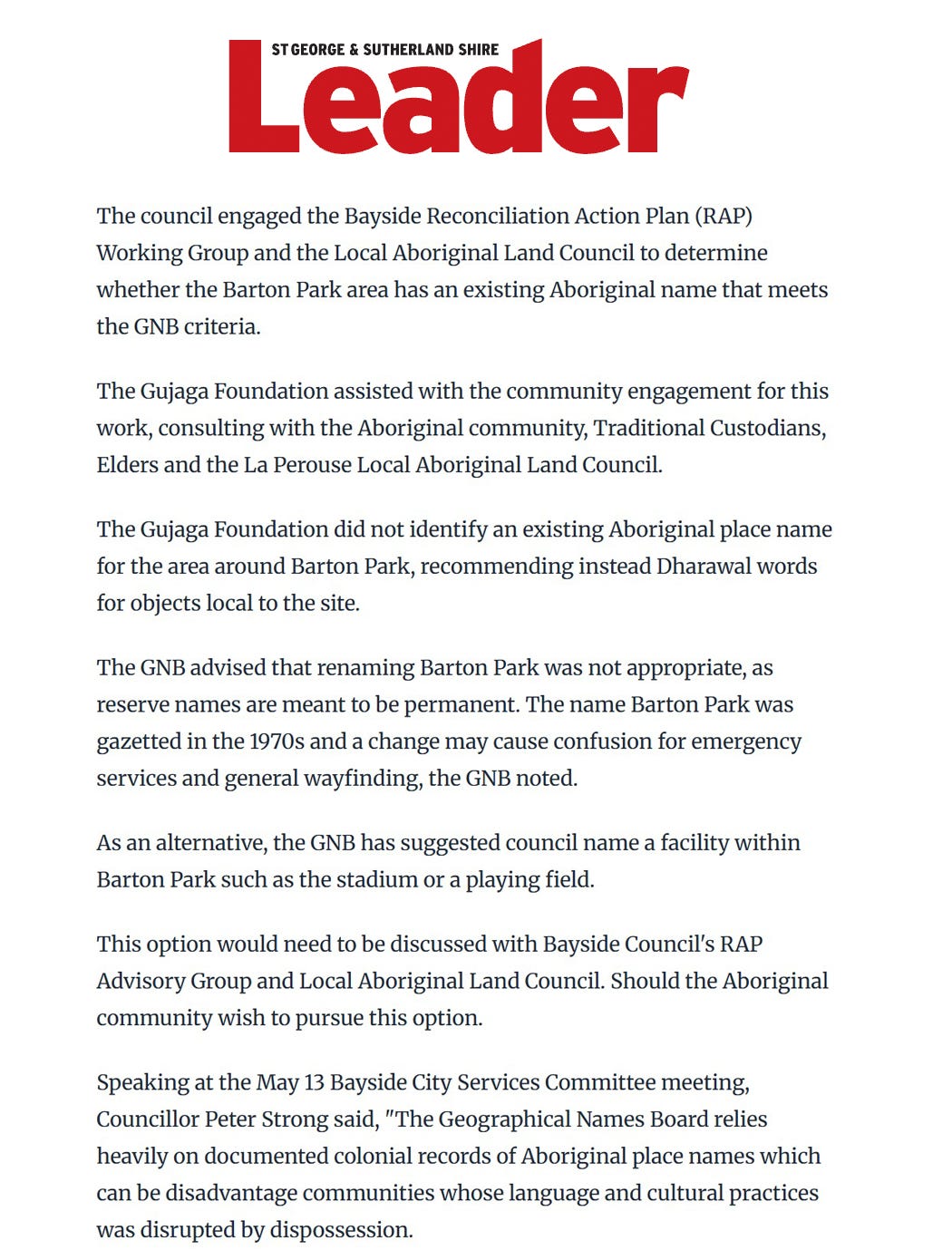
As reported by The Leader:
“Bayside Council will make a formal submission to the Geographic Names Board to endorse the dual name Wadhangarii-Barton Park for Barton Park.”
And from the council resolution itself:
“That Council endorses the dual name Wadhangarii-Barton Park for formal submission to the Geographic Names Board.”
The proposed name Wadhangarii refers to the Old Man Banksia, a native plant deeply connected to Country and ecology in this region.
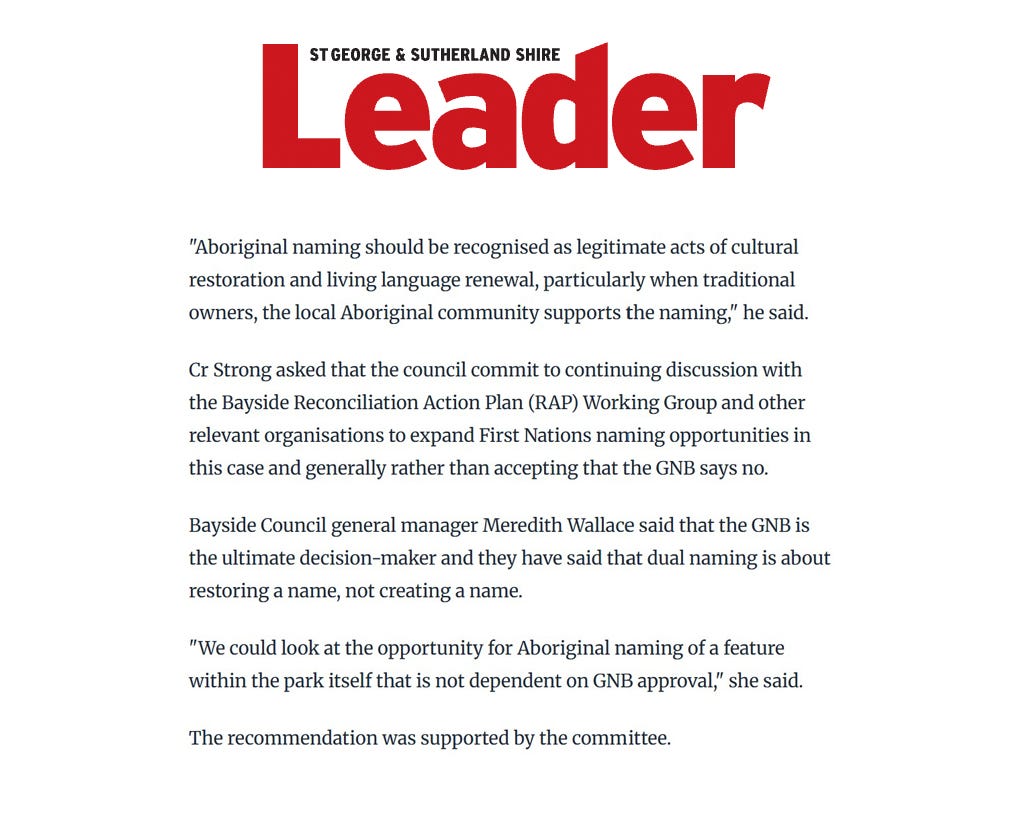
As I said at the Bayside City Services Committee meeting, the current system relies heavily on documented colonial records, which can unintentionally disadvantage communities whose languages and naming systems were disrupted by dispossession and colonisation.
Aboriginal naming should be understood not only as a historical record, but as a living act of cultural restoration and language renewal particularly when supported by Traditional Custodians and local Aboriginal organisations.
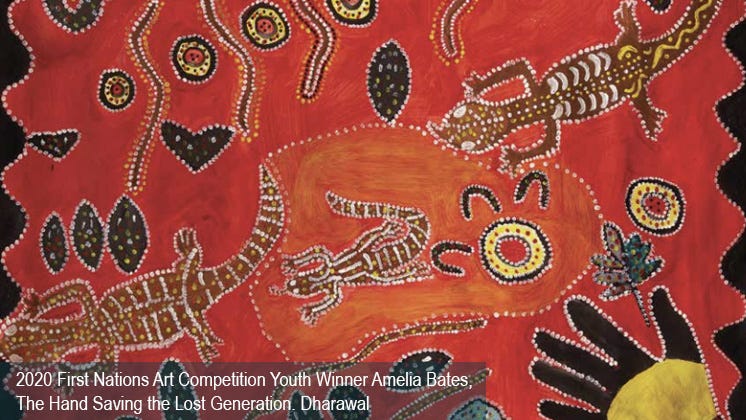
I have strongly advocated that Council continue this work rather than treating the GNB decision as an endpoint. Instead, we should treat it as a starting point for deeper engagement and a broader commitment to increasing First Nations visibility and representation across our public places.
What strikes me about this debate is how much it reveals the limitations of the current naming framework in Australia. Colonisation erased languages, stories, and place names across the continent. Entire systems of knowledge were displaced.
Then, generations later, institutions sometimes ask for impossible levels of “historical continuity” or documentary certainty before recognising Aboriginal names again.
But how can communities produce uninterrupted colonial records for cultures that colonisation itself violently disrupted?
That’s the paradox.
If we are serious about Closing the Gap, reconciliation, and truth-telling, then our institutions including the Geographical Names Board need parameters that recognise the realities of dispossession and cultural survival. Recognition cannot only work for names that slipped through colonisation intact. It also needs to create space for restoration, healing, and collaborative cultural renewal.
This is especially important in places like Bayside, one of the most multicultural parts of Sydney. I ‘ve recently been reminded of the word interculturalism, it captures something deeper than multiculturalism alone. Multiculturalism can sometimes mean communities living side by side. Interculturalism is about exchange, recognition, dialogue, and shared public identity.
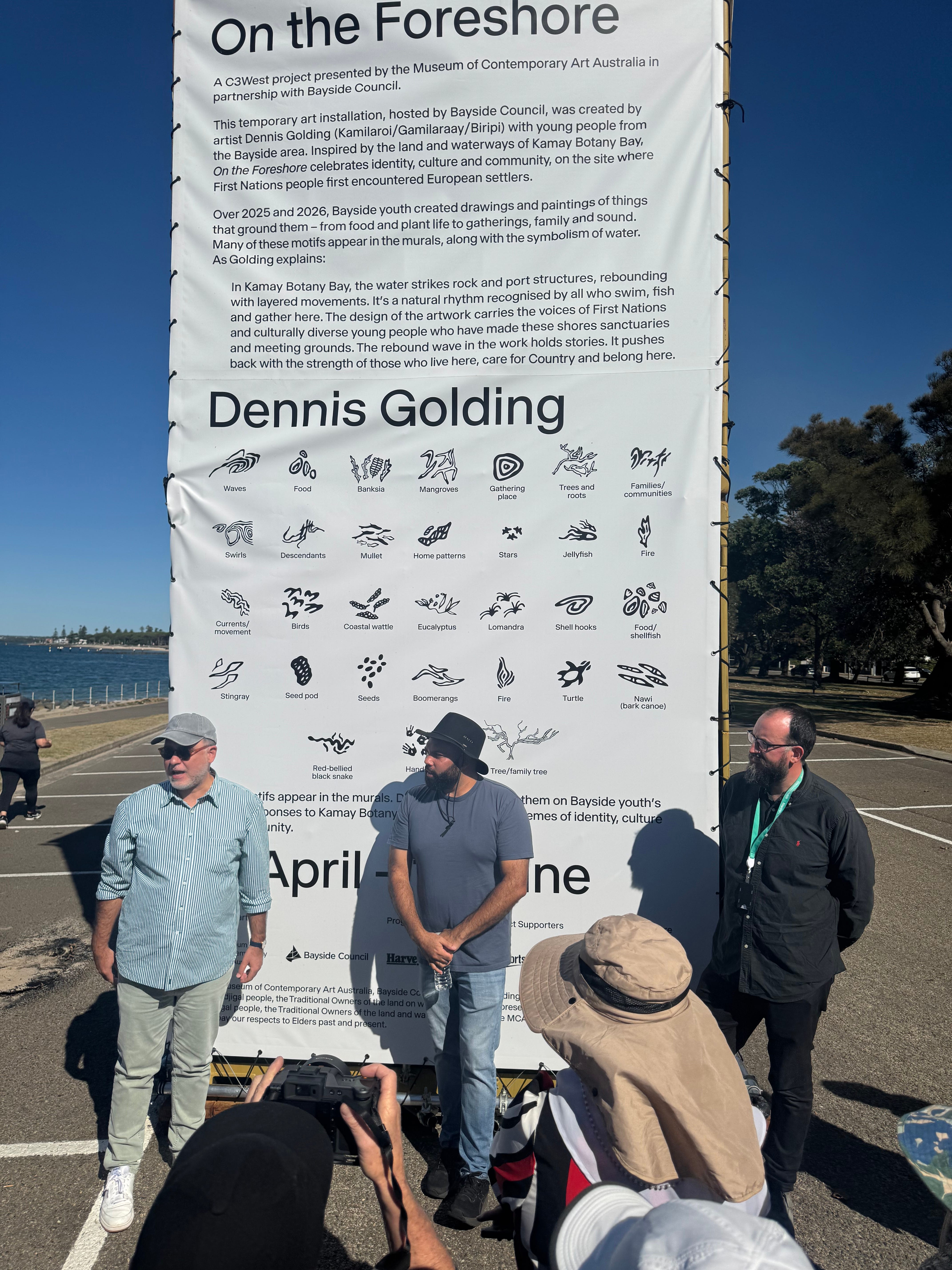
A dual name like Wadhangarii–Barton Park is not about erasing anyone. It is about adding layers of meaning. It invites people to ask questions: What does this word mean? What language is it from? What existed here before us? What stories remain connected to this place?
The irony is that many of the names we treat as “normal” today were themselves imposed through colonial systems with little consultation at all. Yet when First Nations communities seek recognition today, they are often required to pass through far more rigorous processes.
To me, this isn’t just about one park sign, it’s about whether Australia is prepared to evolve its public spaces to better reflect the full story of this continent, ancient, modern, Indigenous, migrant, and shared.
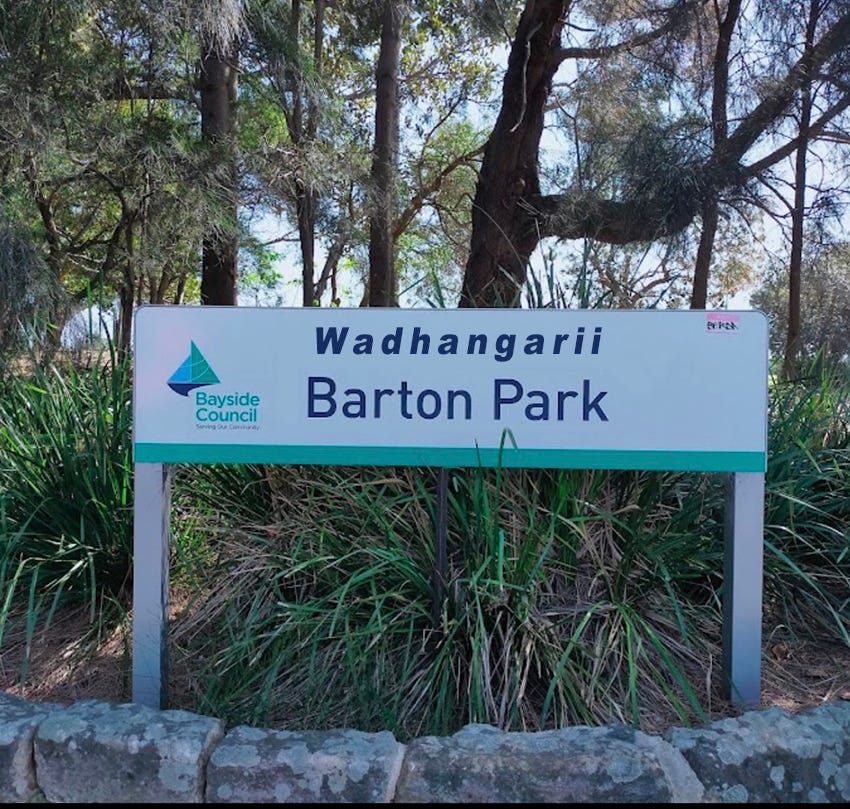
And yes, maybe it’s a little cheeky imagining and photoshopping ( at least not ai ! ) a Barton Park sign already carrying the name Wadhangarii. But sometimes imagination arrives before institutions catch up.
Recognition has to begin somewhere.